
Singapore’s Futuristic Garden in the Clouds
Few places in the world feel quite as futuristic as Gardens by the Bay. Rising beside Marina Bay, this extraordinary 101-hectare garden appears to have been imagined for a science-fiction film: enormous Supertrees tower above tropical vegetation, glass conservatories glow beneath the Singapore skyline, waterfalls tumble through lush mountain landscapes, and thousands of plants create a living tapestry of colour, texture and scent.
Yet Gardens by the Bay is more than a spectacular attraction. It is part of Singapore’s ambitious transformation into a “City in a Garden”—an idea that placed nature, sustainability and quality of life at the heart of the city’s development.
Today, it is one of Singapore’s defining landmarks and a place where architecture and nature appear to grow together.
FROM WATERFRONT TO WONDERLAND
Gardens by the Bay officially opened to the public in 2012, although the idea behind it was developed much earlier. The project formed part of Singapore’s long-term vision to create a greener, more liveable city and transform the Marina Bay area into a new urban centre.
Rather than simply creating a conventional park, Singapore set out to build something extraordinary: a garden that would showcase tropical horticulture, introduce plants from around the world and demonstrate innovative approaches to sustainability.
The result is a landscape unlike almost anywhere else.
More than a million plants are displayed across the gardens, conservatories and themed areas, creating an experience that changes dramatically from one section to another.
And then there are the trees.
THE SUPERTREES: SINGAPORE’S LIVING SKYSCRAPERS
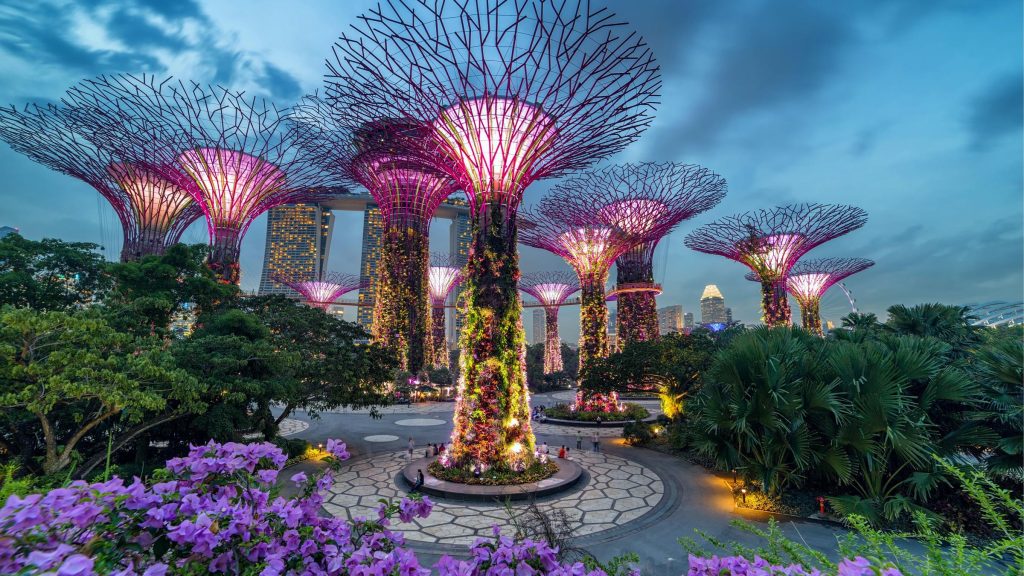
The Supertrees are perhaps the most instantly recognisable feature of Gardens by the Bay.
Standing between approximately 25 and 50 metres high, these enormous vertical structures resemble futuristic trees from another planet. Their steel frameworks are covered with climbing plants, ferns, orchids and other tropical species, allowing vegetation to grow vertically rather than horizontally.
But the Supertrees are not merely decorative.
Their design incorporates environmentally sustainable technologies. Some function as part of the garden’s energy and environmental systems, including solar panels that generate electricity. Others form part of the cooling and ventilation systems associated with the conservatories.
The Supertree Grove is particularly spectacular after sunset. As darkness falls, the trees come alive with colour and light during the famous Garden Rhapsody light-and-music show.
Standing beneath the glowing structures while music fills the air is one of Singapore’s great evening experiences.
For an even more dramatic perspective, visitors can walk along the OCBC Skyway, an elevated walkway connecting several Supertrees. From above, the garden opens into a panorama of Marina Bay, Marina Bay Sands and Singapore’s modern skyline.
FLOWERS, PLANTS AND A WORLD OF COLOUR
The true stars of Gardens by the Bay, however, are the plants.
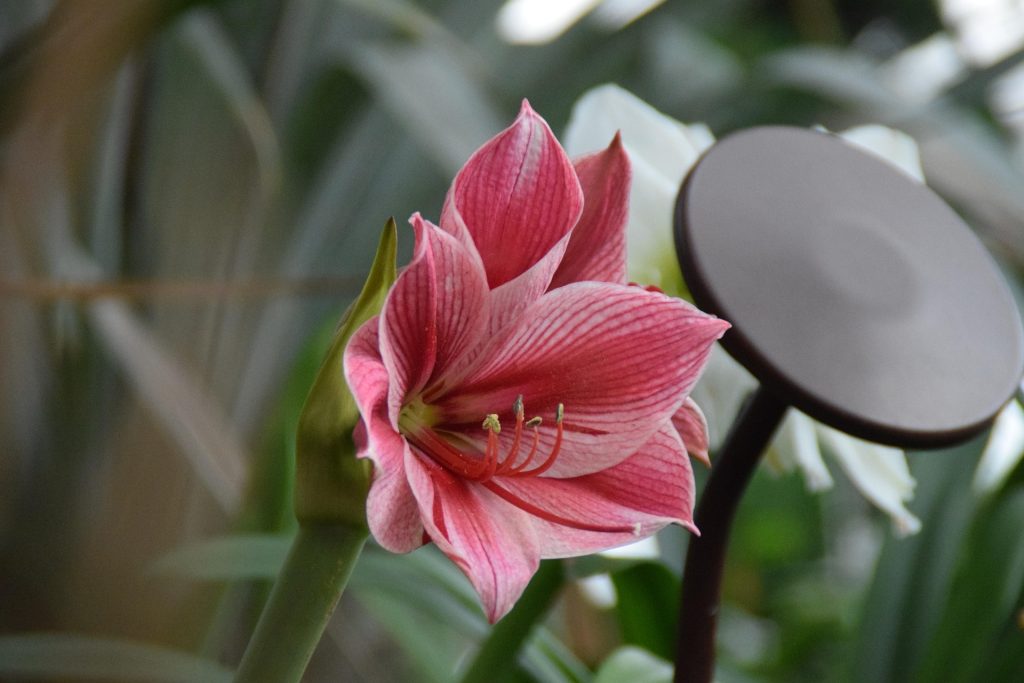
The gardens showcase species from Singapore and Southeast Asia as well as plants originating from different climates around the world. Depending on where you explore, you may encounter towering tropical trees, delicate orchids, colourful bromeliads, unusual succulents, carnivorous plants, palms, ferns and flowering plants.
Singapore’s national flower, the Vanda Miss Joaquim orchid, is among the botanical highlights visitors may encounter.
The gardens are also designed to demonstrate how plants can be used creatively in an urban environment. Vertical planting, themed gardens and carefully designed landscapes show that greenery does not have to be confined to traditional parks.
For garden lovers, photographers and anyone fascinated by tropical flora, it is possible to spend hours simply looking at the extraordinary variety of shapes, colours and textures.
THE FLOWER DOME
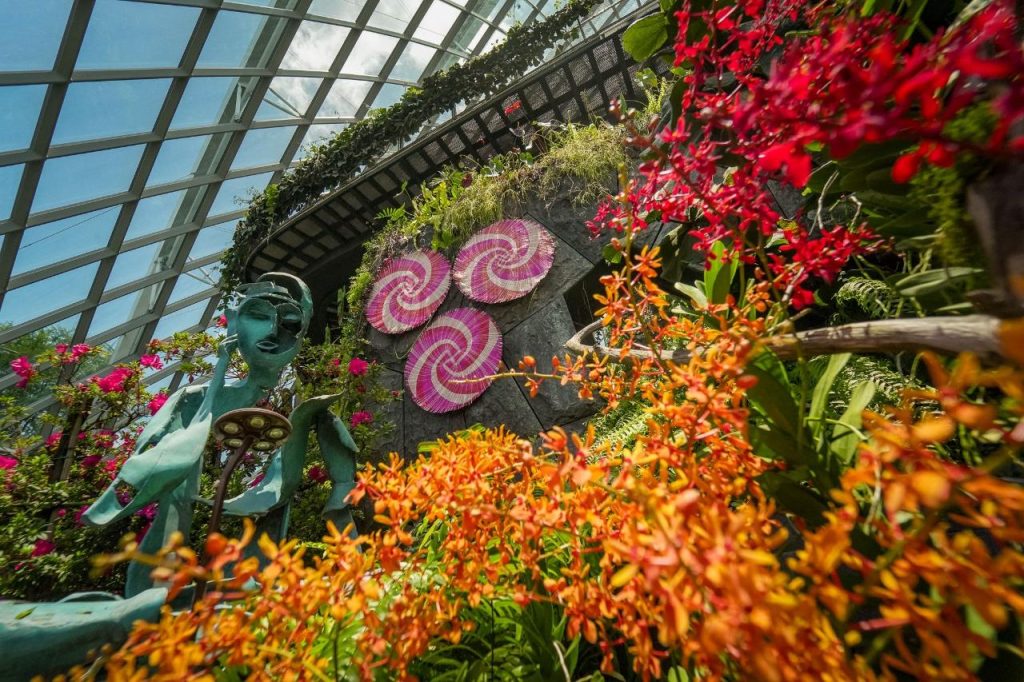
One of the most impressive attractions is the Flower Dome, a vast glass conservatory that transports visitors into a world of plants from Mediterranean and semi-arid regions.
Inside, the temperature is cooler than outside, making it a welcome escape from Singapore’s tropical heat.
The landscape changes with seasonal floral displays, and visitors can discover plants from places as diverse as Australia, South America, Africa and the Mediterranean.
Baobabs, succulents, unusual trees and colourful flowers create an almost dreamlike environment.
The Flower Dome also hosts special horticultural exhibitions throughout the year, meaning the experience can be different on a return visit.
CLOUD FOREST: A MOUNTAIN INSIDE A GLASSHOUSE
Then comes Cloud Forest, one of the most spectacular attractions in the entire complex.
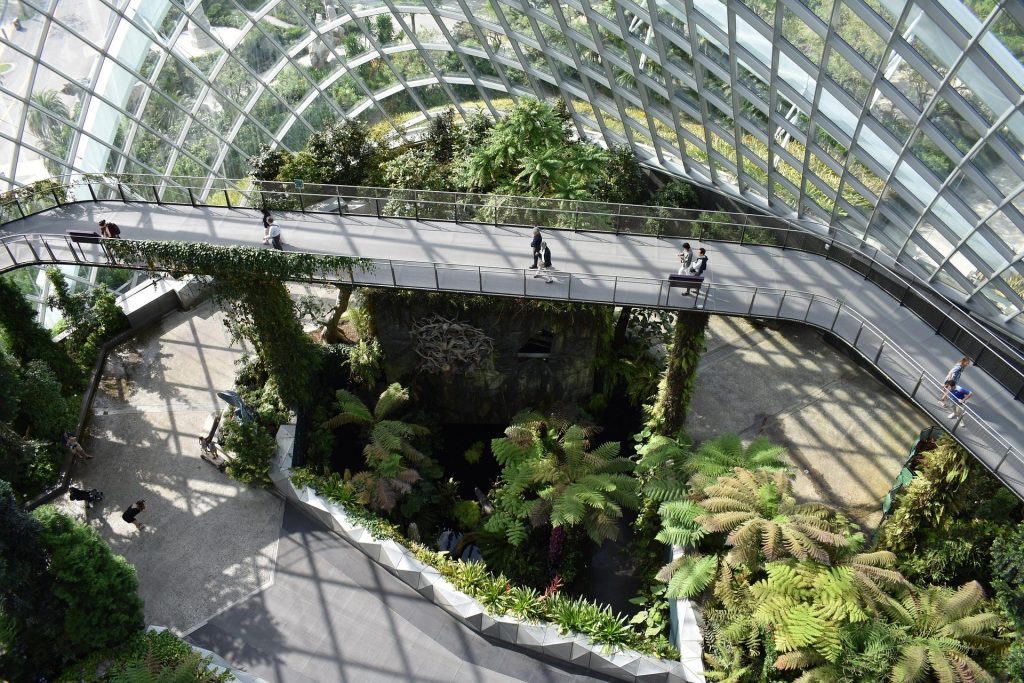
Enter the conservatory and a huge indoor mountain rises before you, surrounded by mist, tropical vegetation and waterfalls.
The enormous indoor waterfall is one of the first things visitors notice. At around 35 metres high, it creates a dramatic curtain of water as it plunges down through the lush landscape.
Walkways lead visitors upwards through different levels of the mountain, revealing orchids, ferns, mosses, pitcher plants and other species associated with tropical highland environments.
The higher you climb, the more spectacular the views become.
Cloud Forest also explores climate change and the importance of protecting vulnerable ecosystems. The experience combines horticulture with education, reminding visitors that the extraordinary environments represented inside the conservatory are part of a much larger and increasingly fragile global ecosystem.
ANIMALS IN THE GARDENS
Gardens by the Bay is not a zoo, but it is very much alive with wildlife.
Look carefully and you may discover butterflies moving between flowers, bees and other pollinating insects, dragonflies around waterways and birds feeding among the vegetation.
The gardens provide habitat for a surprisingly wide variety of urban wildlife. Depending on the season and location, visitors may spot birds such as sunbirds, mynas, kingfishers and herons.
The waterways and ponds can also attract fish, while reptiles and other small creatures occasionally make appearances.
In the conservatories, the focus is primarily on plants, but butterflies and other insects are an important part of the living environment.
The most enjoyable approach is simply to slow down. Instead of walking through the gardens looking only for the next landmark, watch the leaves, listen to the birds and look closely at flowers. Gardens by the Bay rewards curiosity.
DRAGONFLY LAKE AND KINGFISHER WETLANDS
The gardens also contain naturalistic habitats designed around water.
Dragonfly Lake is particularly interesting for visitors interested in Singapore’s biodiversity. Its aquatic environment supports dragonflies, fish and other organisms while demonstrating how water can be incorporated into an urban landscape.
The Kingfisher Wetlands offers another opportunity to experience nature within the city. Wetlands provide important habitats for birds, aquatic life and insects and demonstrate the ecological importance of waterways.
These areas reveal another side of Gardens by the Bay. Beyond the spectacular architecture, the project is also about creating functioning ecological spaces.
WHAT CAN YOU EAT?
Exploring such a huge attraction naturally creates an appetite.
Fortunately, Gardens by the Bay offers a range of dining options, from casual cafés and snacks to restaurants with impressive views.
For something distinctly Singaporean, visitors can head towards Satay by the Bay, where hawker-style dining meets the waterfront. Satay, seafood, noodles, rice dishes and other local favourites make it a convenient place to experience Singapore’s famous food culture in a relaxed outdoor setting.
Around the gardens and Marina Bay area, visitors can also find cafés, restaurants and bars offering Asian and international cuisine.
For a special occasion, dining with a view of the Supertrees or Marina Bay transforms a simple meal into part of the Gardens by the Bay experience.
And, of course, Singapore’s tropical climate makes a cold drink or ice cream particularly welcome after walking through the gardens.
LANDMARKS NOT TO MISS
A first visit should include several signature attractions:
Supertree Grove – The unmistakable futuristic heart of Gardens by the Bay.
OCBC Skyway – An elevated walkway offering views across the gardens and Marina Bay.
Flower Dome – A spectacular climate-controlled conservatory filled with plants from around the world.
Cloud Forest – Home to the giant indoor waterfall, mountain landscape and highland plants.
Dragonfly Lake – A tranquil area highlighting aquatic ecosystems and biodiversity.
Kingfisher Wetlands – A habitat designed to encourage wildlife and showcase wetland ecology.
Garden Rhapsody – The famous evening light-and-music experience beneath the Supertrees.
And just beyond the gardens stands another Singapore icon: Marina Bay Sands, whose dramatic three-tower silhouette provides a spectacular backdrop to the gardens.
COME IN THE DAY — STAY FOR THE NIGHT
Gardens by the Bay is one of those rare attractions that offers two completely different experiences.
During the day, the emphasis is on plants, landscapes, architecture and discovery. Sunlight illuminates the conservatories, flowers reveal their colours and the Supertrees rise dramatically against the blue Singapore sky.
After sunset, the atmosphere changes.
The skyline lights up. The Supertrees begin to glow. Visitors gather beneath them for Garden Rhapsody, and the futuristic structures become a spectacular combination of music, light and technology.
It is worth planning your visit so you experience both.
A GARDEN FOR THE FUTURE
Perhaps the greatest achievement of Gardens by the Bay is that it manages to make environmental ideas exciting.
It demonstrates that sustainability does not have to mean sacrificing beauty or ambition. Technology can work alongside nature. Architecture can create habitats. A modern city can make room for biodiversity.
Singapore has transformed a former waterfront area into a destination where millions of people can experience plants, wildlife, architecture and culture in a single journey.
Gardens by the Bay is therefore more than a garden.
It is a statement about what a modern city can become.
Walk beneath the Supertrees. Stand beside the giant waterfall in Cloud Forest. Lose yourself among the flowers of the Flower Dome. Search the wetlands for birds and dragonflies. Stop for satay as the sun goes down. Then look up as the Supertrees burst into light.
For a few moments, Singapore does not look like a city surrounded by nature.
It looks like a city that has learned how to build a future with nature at its heart.